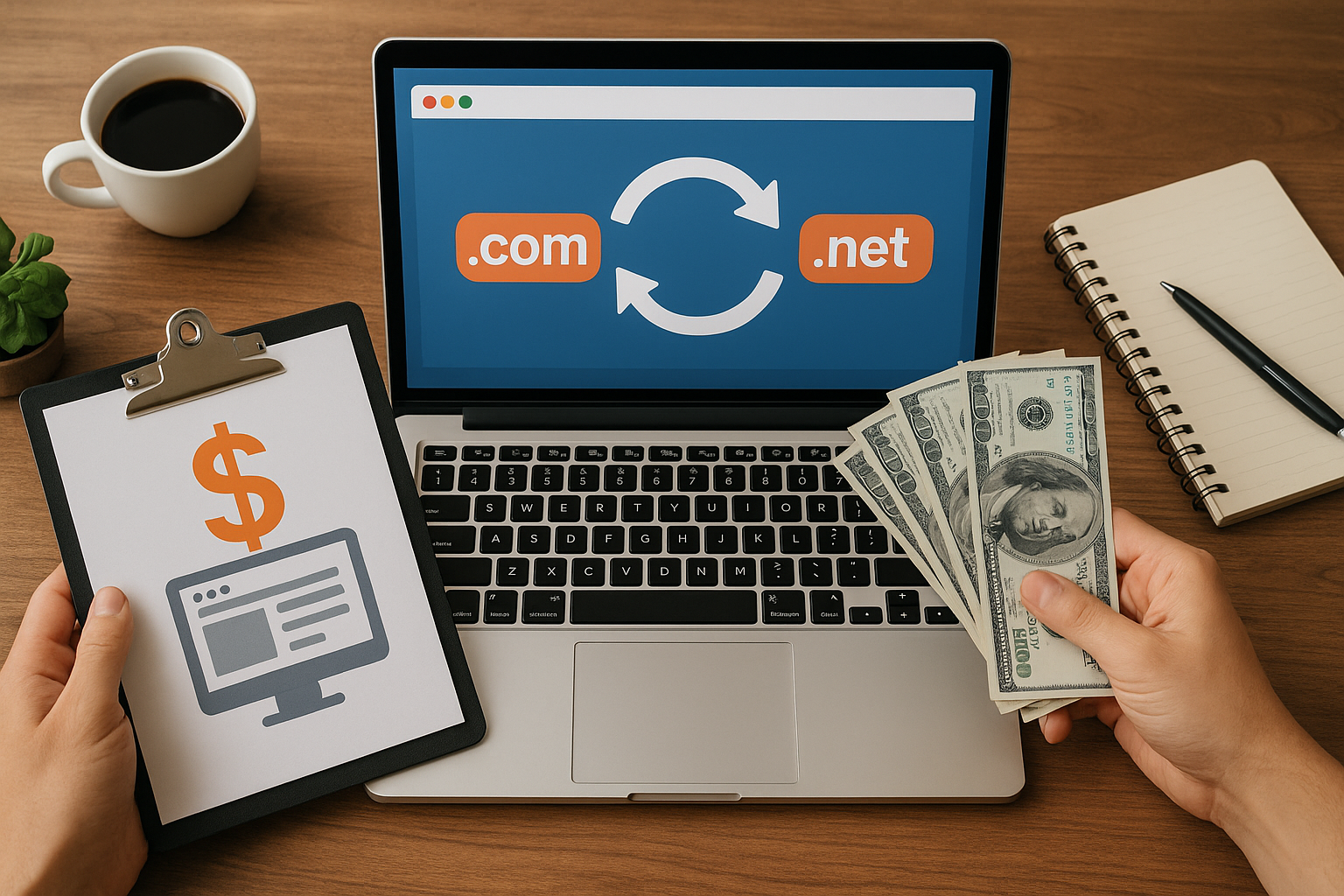
Flipping websites and domains can be a lucrative way to earn income or bootstrap a new online business. This practical guide walks you through what flipping involves, how to value assets, where to find deals, how to perform due diligence, and how to execute smooth transfers and handoffs. It’s designed for beginners who want a clear, repeatable process, as well as for seasoned flippers looking to tighten their playbook.
Overview: what flipping involves
– Flipping websites: You buy an existing site, improve its traffic, revenue, or user experience, and then sell it for a higher price. Improvements can include content updates, on-page SEO tweaks, better monetization (ads, affiliate programs, or memberships), speed and UX optimizations, and cleaner branding.
– Flipping domains: You buy a domain name (often a brandable or keyword-rich dot-com or relevant TLD), then sell it to a buyer who finds it valuable for branding, a new project, or SEO leverage. Domain flips rely on market demand, branding potential, and the domain’s technical attributes.
Key value drivers
– Websites:
– Revenue and profit: Stable, predictable income from ads, affiliates, or e-commerce.
– Traffic quality and growth potential: Organic search presence, referral sources, and room to scale.
– Monetization mix: Whether earnings come from ads, affiliate links, e-commerce, or subscriptions.
– Content quality and niche potential: Authority in a defensible niche with room to expand.
– Operational factors: Ease of transfer, existing infrastructure, and documented processes.
– Domains:
– Brandability and memorability: Short, easy-to-pronounce names with broad appeal.
– Relevance and keywords: Domains that match a market need or niche.
– Extension and age: .com is typically preferred; older domains with clean histories can command premiums.
– Backlinks and trust signals: Clean backlink profiles and lack of penalties raise value.
– Market demand: Availability of buyers in the target niche who can use the domain quickly.
Valuation fundamentals
– Websites:
– Start with annual net profit (or monthly profit if you’re using a quick rule of thumb). A common range for many sites is a multiple of annual profit that varies by risk, growth, and defensibility.
– Typical ranges you’ll see in the market:
– Small, stable sites: 2–3x annual net profit
– Solid, established sites with growth potential: 3–5x
– Strong, well-monetized, niche-dominant sites: 6–10x or more
– Example: If a site earns $1,000 per month in net profit ($12,000 per year), a reasonable sale price might be in the $24,000–$60,000 range, depending on growth potential, competition, and risk.
– Domains:
– Valuation is more about comparables, branding potential, and buyer willingness than a fixed profit multiple.
– Factors to weigh: length, memorability, keyword relevance, extension, age, traffic or revenue history (if any), and the likelihood a buyer can monetize it quickly.

– Price ranges vary widely:
– Generic or highly brandable .com domains: often higher, sometimes mid five figures or more
– Good quality domains in other niches or with decent search intent: hundreds to low thousands
– Poor quality or highly niche domains: often under a thousand
– Use comparables (recent sales of similar domains), appraisal tools, and your assessment of what a buyer would pay to avoid overpaying.
Sourcing: where to find deals
– Marketplaces and brokers: Flippa, Empire Flippers, FE International, Sedo, Motion Invest, WebsiteBroker, and others. Each platform has its own vetting level, fee structure, and user base.
– Direct outreach: Identify sites or domains in your target niches via search, social media, and network referrals. Reach out with a well-crafted value proposition.
– Niche auctions: Periodic auctions focused on particular topics or website types can yield undervalued assets.
– Expired domains: Platforms that curate expiring domains, sometimes offering clean histories and traffic.
Due diligence checklist (for both websites and domains)
– Ownership and transfer reliability:
– Verify you’ll own the asset outright at closing; check registrar or hosting account access, and ensure clean ownership history.
– Confirm the seller can transfer domain ownership, hosting accounts, social profiles, and any other assets (if part of the package).
– Traffic and revenue verification (websites):
– Check analytics directly (Google Analytics, Google Search Console) for authentic traffic sources, trends, and geographic distribution.
– Look for traffic quality issues (buys, bots, or questionable referrals) and seasonality.
– Confirm revenue streams (ads, affiliate, e-commerce) and long-term sustainability; review the last 12–24 months of income and expenses.
– Inspect monetization health: ad zones, affiliate disclosures, pending payouts, etc.
– Review content quality, update cadence, copyright status, and potential licensing issues.
– SEO and backlink quality (websites):
– Analyze backlinks for spam or PBNs; check for penalties or sudden ranking drops.
– Assess on-page SEO: title tags, meta descriptions, internal linking, crawlability, and page speed.
– Legal and compliance:
– Check for trademark conflicts, copyright issues, and any restricted content.
– Ensure compliance with affiliate programs’ terms and disclosure requirements.
– Domain health (domains):

– Check historical usage with Wayback Machine; look for potential penalties or past spam activity.
– Evaluate the domain’s age, anchor text distribution (if it has backlinks associated with it), and namespace stability.
– Inspect DNS health and renewal timing; confirm there are no outstanding conflicts or escrow red flags.
– Operational readiness:
– For websites, assess hosting, CMS, plugins, backups, and security posture.
– For domains, confirm transfer mechanics, registrar lock status, and availability of the authorization code.
Negotiation and pricing
– Do your homework: know the asset’s estimated range based on your due diligence and compare with comps or recent sales.
– Start with a reasonable offer that leaves room for negotiation; avoid revealing your top limit upfront.
– Consider including an escrow-based payment and a trial period to verify traffic and revenue before finalizing the transfer.
– Be transparent about required transfers (domain, hosting, social accounts) and timelines; clarify what happens if traffic or revenue dips post-sale.
Closing, escrow, and transfer
– Use a reputable escrow service or a platform’s built-in escrow to protect both sides.
– For websites:
– Prepare a handover checklist: admin accounts, hosting control panel access, FTP/SSH, database export, CMS admin access, analytics accounts, and documentation.
– Change ownership details and ensure 2FA is enabled on all critical accounts.
– For domains:
– Unlock the domain, obtain the transfer authorization code, and initiate the transfer after payment is secured.
– Update registrant details, enable privacy protections if desired, and confirm successful transfer with the buyer.
– Document everything: transfer confirmations, transaction receipts, and a simple post-sale support agreement if you offer limited support.
Post-sale improvements (optional but beneficial)
– If you plan to flip more quickly, focus on quick-win improvements:
– For websites: fix broken links, improve page speed, optimize top revenue pages, and strengthen internal linking. Update or expand high-potential content.
– For domains: develop a basic landing page or branding concept to demonstrate potential to buyers; gather data on hypothetical use cases to justify a higher price.
– Build a process library: create templates for due diligence, valuation, outreach, and transfer steps so you can repeat deals efficiently.
Platforms and tools to support flipping
– Marketplaces/brokers: Flippa, Empire Flippers, FE International, Sedo, Motion Invest, WebsiteBroker.
– Analytics and SEO tools: Google Analytics, Google Search Console, Ahrefs, Semrush, Moz, Majestic.
– Domain and registrar tools: WHOIS history, DNSSEC status, domain age checks, DNS tools, and registrar dashboards.
– Valuation and comparables: online appraisal services, recent sales data, and marketplace sale histories.
– Transfer and escrow: trusted escrow services (often offered by platforms) and standardized purchase agreements.
A simple, repeatable process you can use
1) Define your target: choose a niche or asset type (website or domain) you’re comfortable with and can reasonably assess.
2) Source candidates: monitor marketplaces, perform outreach, and assemble a short list of prospects.
3) Do due diligence: verify ownership, traffic, revenue, and any legal concerns. Build a red-flag checklist.
4) Value and negotiate: estimate a fair price using your valuation framework; negotiate with data-backed arguments.
5) Secure the deal: use escrow, confirm terms, and agree on transfer steps and timelines.
6) Transfer and handoff: execute domain/hosting transfers, hand over access credentials, and provide basic documentation.
7) Post-sale follow-up: ensure the buyer is satisfied, address any minor issues, and document lessons learned.
Common mistakes to avoid
– Overpaying for asset with weak growth signals or unclear traffic sources.
– Neglecting due diligence, especially around revenue sustainability and penalties.
– Ignoring legal issues or trademark conflicts that could derail the deal.
– Underestimating the effort required to improve a site’s monetization or branding.
– Skipping escrow or trust-based payment structures, increasing the risk of disputes.
– Rushing a transfer without confirming access and ownership rights.
A short, practical example
– You buy a content site in a mid-tier cooking niche for $25,000. It earns about $1,000 per month after expenses (~$12,000 per year). You make a few on-page SEO tweaks, add a couple of affiliate programs, and improve the top 5 revenue pages. In 60 days, monthly profit rises to $1,500. With a conservative 4x annual profit valuation, the new sale price could be around $48,000. You sell for $48,000, having spent roughly $2,000 on enhancements, and you walk away with about $21,000 in profit after fees and costs. This hypothetical demonstrates how improvements can lift value, but actual results vary with market conditions and execution.
Final tips
– Start small to learn the mechanics of buying, improving, and selling assets before scaling up.
– Build a network of reliable buyers, brokers, and escrow providers to speed up deals and reduce risk.
– Keep detailed records of revenue, expenses, and asset transfers; documentation helps buyers and reduces negotiation frictions.
– Be patient: the market for flips can be cyclical, and good assets in desirable niches can take time to find the right buyer.
This guide is designed to give you a practical roadmap for flipping websites and domains. If you’d like, I can tailor a step-by-step playbook to your preferred niche, budget, and risk tolerance, or run through a sample deal with your numbers to illustrate the process end-to-end.